AI powered text message spam and scam

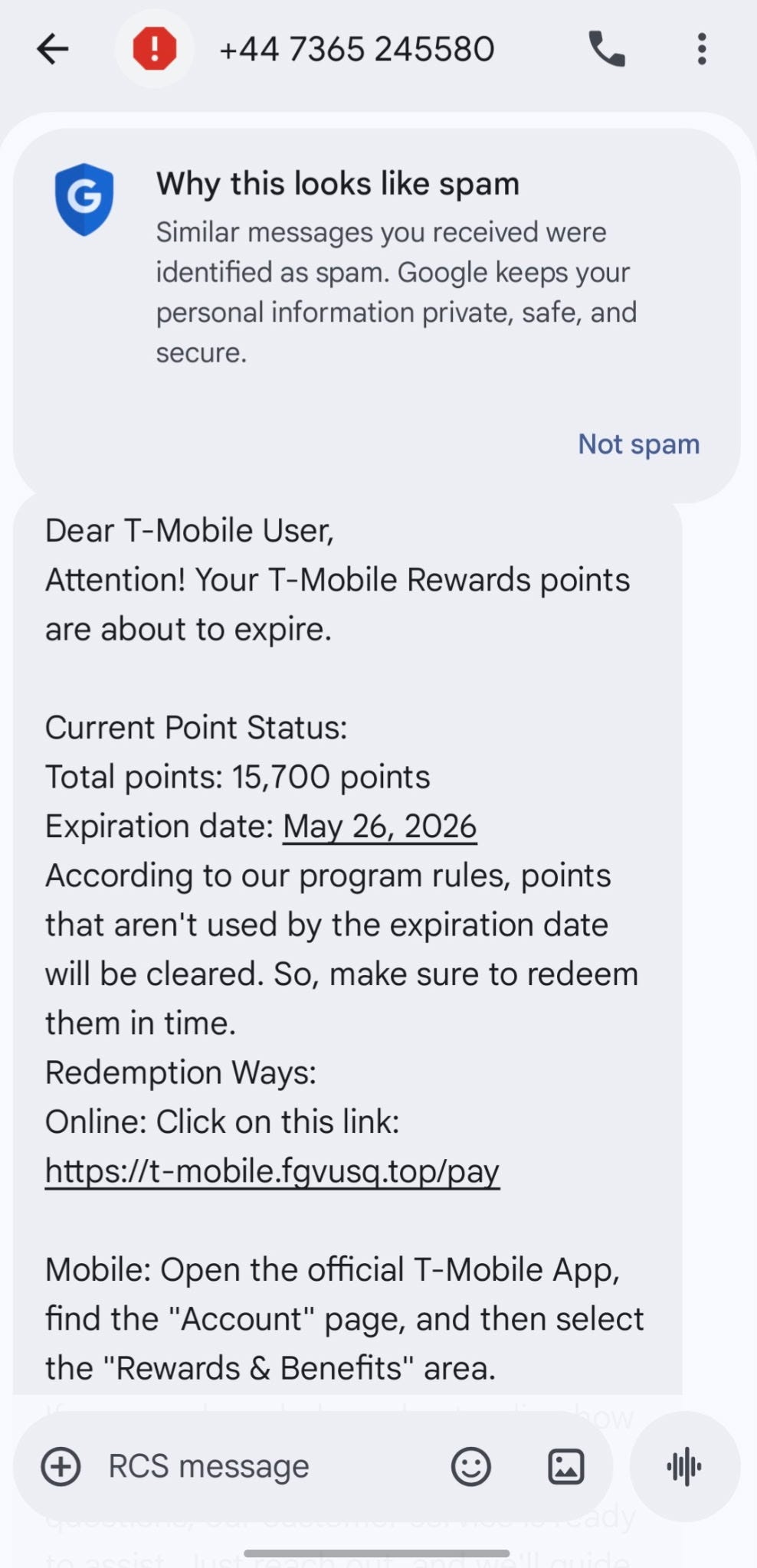
This rise of AI has led to a rise of a new kind of spam and scam.
AI-powered scam texts surged 1,210% in 2025, far outpacing the 195% growth in traditional fraud, with projected losses reaching $40 billion by 2027. The "wrong number" scam is particularly prevalent where AI helps scammers zero in on area codes and build credible narratives that trap victims. Fewer spelling/grammar mistakes, context-specific details from breached data and phone number spoofing makes texts appear all the more legitimate. Most spam texts are random. Scammers use software to blast texts to every potential number in an area code they often have no idea who you are. Data brokers, Dark web purchases and Data breaches is how the targeting gets started. Once it’s out there then it is extremely hard to remove. Data brokers and the dark web keep recycling it.
AI is supercharging the random spam blast by making it faster, cheaper, and more effective than ever before.
Automated message generation: AI generates thousands of unique text variations in seconds, avoiding spam filters that block identical messages Scammers can blast unlimited messages for essentially free.
Machine learning optimization: AI analyzes which messages get responses and automatically refines strategies to improve success rates Spam becomes more effective over time without human intervention.
Mass scalability: AI eliminates the need for human touch in personalization, enabling millions of messages sent simultaneously Scammers can reach far more victims than traditional human-only operations.
Pattern recognition: AI learns which language patterns, timing, and sending frequencies bypass spam filters Messages bypass traditional keyword-based filters more easily.
Area code targeting: AI analyzes phone number databases to generate and target numbers within specific area codes automatically Random number generation becomes more efficient and targeted.
Coming to the finances:
The AkiraBot spam framework demonstrates this clearly:
Uses OpenAI’s chat API to generate spam messages
Has targeted 80,000+ websites in 6 months
Generates unique messages for each website using a template + AI prompt
Even with API costs (roughly $0.001–$0.01 per message), sending 1 million messages costs $1,000–$10,000 total—far cheaper than hiring humans to write unique content.
The barrier to entry is dramatically low both in terms of cost and time invested. This means:
Anyone with ~$100 can start a spam campaign (compared to thousands before).
Scammers can afford to spam millions of random numbers and still profit from tiny response rates.
Bottom line is AI doesn't make spam literally free, but it makes it cost-effective enough that spamming millions of random numbers becomes profitable.
How to Protect Yourself
Don’t answer unknown calls – answering signals your number is live.
Never respond to spam texts – confirms your number is active.
Use a secondary number (like Google Voice) for online signups instead of your real number.
Don’t put your number on public social media profiles.
Remove your number from data broker lists – follow opt-out processes on people-search sites. This may not be possible sometimes due to the invasiveness.
Enable spam filtering – use built-in phone filters or built-in spam filters (iPhone: Settings → Messages → Filter Unknown Senders; Android: Messages → Settings → Spam protection).
Apps like TextKiller (iPhone) or Truecaller (Android) might help. But there is a cost associated with it.
Report spam texts – forward to 7726 (SPAM).
The frustrating reality is that most scammers are just spraying and praying they’re not targeting you specifically, but rather hoping you’ll respond to their mass blast. If a text doesn't address you by your full name, it's almost certainly a mass scam. When in doubt, block and delete. Stay vigilant, your security depends on it.
Next edition I will spotlight another interesting AI trend I observed. A prolific bot spamming half of YouTube comments and TikTok comments selling an AI generated book with a stolen book cover and written by a fake author.